Stockholm Syndrome in Abusive Relationships: From Emotional Captivity to Healing through Therapy
The term „Stockholm Syndrome” often conjures up images of bank robberies and hostages defending their captors. However, this complex psychological phenomenon is not limited to extreme hostage situations. It manifests itself, much more frequently and insidiously, behind closed doors, in abusive relationships.
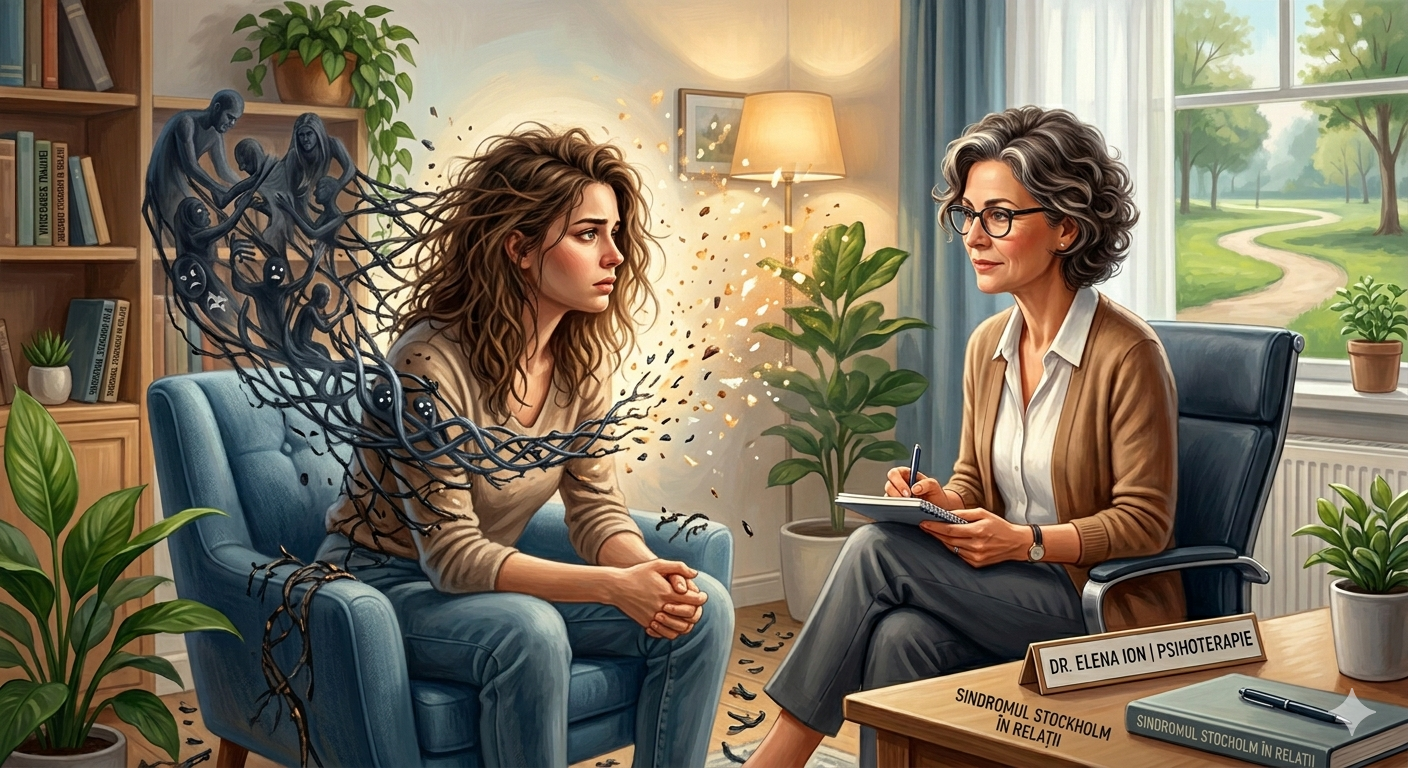
Essentially, it's the same survival mechanism. The difference lies in the context: instead of a physical cell, the victim is imprisoned in an "emotional prison" built of fear, addiction, and manipulation.
What actually is this syndrome?
It is not a mental illness, but a psychological defense mechanism, a paradoxical adaptive response to a situation of extreme stress and continuous threat to physical or psychological integrity. Faced with imminent danger, the human brain looks for ways to survive, and sometimes, the "safest" way seems to be to ally with the source of the danger.
The Mechanism in Abusive Marital Relationships
In the context of domestic violence, Stockholm Syndrome develops through a vicious cycle, often called the "Cycle of Abuse":
- Voltage: Stress and anger build up.
- The explosion: The act of violence (physical, verbal, emotional) takes place.
- „"Honeymoon": The aggressor apologizes, becomes affectionate, promises it won't happen again, gives gifts.
This „honeymoon” phase is crucial for the development of the syndrome. The victim, desperate for affection and security, clings to these positive moments. Her brain begins to associate the abuser not only with pain, but also with the only source of comfort and „love” available.
How does emotional captivity manifest itself?
- Positive feelings towards the aggressor: The victim may feel deep compassion for the abuser, believing that he or she is „hurt” or has a „hard life.” She minimizes the abuse and focuses on the good times.
- Negative feelings towards the outside: The victim may perceive family, friends, or authorities who try to help them as enemies who want to „destroy the relationship.” This leads to isolation.
- Rationalization and self-blame: The victim makes excuses for the abuser's behavior ("she had a hard day at work," "I made her angry.") She comes to believe that she is to blame for the abuse.
- Addiction and difficulty quitting: The fear of being alone, the fear of retaliation, the financial dependence, but especially the emotional dependence created, make the idea of separation almost impossible.
The Role of Therapy: The Path to Freedom
Being caught in this emotional web is paralyzing. But healing is possible. Therapy in a psychological office is essential to break these toxic bonds and rebuild a life based on respect and safety.
How can a therapist help you break free?
- Deconstructing cognitive distortions: The therapist will help you identify and correct faulty thinking patterns (e.g., "it's my fault," "I can't live without him.") You will learn to see the abuse for what it is, without excuses.
- Reality validation: In an abusive relationship, the victim's reality is constantly denied (gaslighting). The therapist will validate your experiences and feelings, helping you regain confidence in your own perception.
- Processing trauma: Therapy provides a safe space to process accumulated trauma, helping you manage fear, anxiety, and shame.
- Rebuilding self-esteem: Abuse destroys self-confidence. The therapist will work with you to rediscover your value, talents, and identity, independent of the toxic relationship.
- Safety planning and breaking the bond: The therapist will help you develop a concrete and safe plan to leave the abusive relationship and will support you in maintaining the decision (Zero Contact), managing the desire to return (emotional withdrawal).
Stockholm syndrome is not a choice, it is a psychological trap. If you are in a relationship marked by fear and control, remember that you deserve to be safe and respected. You are not alone. Seek professional help. A psychotherapist is your ally on the path to freedom and healing.