Anorexia – Causes, Symptoms and Therapy | Psychologist Constanta
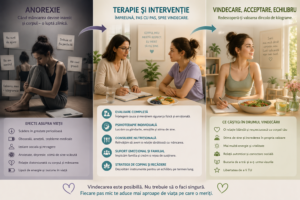
Anorexia is an eating disorder characterized by severe caloric restriction, intense fear of gaining weight, and a distorted body image. It profoundly affects emotional stability and daily functioning, but can be significantly improved through Cognitive-Behavioral Therapy and Schema Therapy. In the psychology office in Constanta or online, the intervention is personalized to regain emotional balance and rebuild the relationship with one's own body.

| Prevalence: | Estimated time: | Methods: |
| It affects approximately 1-21% of the population, with a high frequency among adolescents and young adults. | 6–12 months for emotional stabilization and cognitive restructuring; the process varies depending on the age of the disorder. | Cognitive Behavioral Therapy (CBT), Schema Therapy, Mindfulness, Emotional Regulation Techniques. |
How does it manifest itself?
How does it affect daily life and relationships?
- Dietary restriction and rigid rules: Obsessive calorie counting, eliminating major food groups, and setting tiny portions.
- Distorted body image: Persistent perception of being "over your desired weight," even in stages of severe underweight.
- Intense fear of losing control: Food becomes the only area in life where the person feels they have absolute control.
- Obsessive eating rituals: Cutting food into very small pieces, chewing excessively, hiding food or throwing it away secretly.
- Social isolation and avoidance: Avoiding family meals, outings with friends, or social events that involve food.
- Family tensions and conflicts: Relational dynamics deteriorate due to concern for loved ones and defense/hiding mechanisms.
- Decreased performance and chronic fatigue: Lack of energy affects the ability to concentrate at school, college, or work.
- Anxiety and depressive states: The installation of a deep sense of shame, guilt after every meal and disconnection from one's own emotions.
How we work together on "affection"„
Step 1 (20%): Assessment & Therapeutic Alliance – Identifying triggers (trauma, insecurity, perfectionism) and creating a safe space without judgment.
Step 2 (30%): Psychoeducation & Emotional Regulation – Understanding the role of the symptom (how anorexia protects against overwhelming emotions) and developing healthy stress coping mechanisms.
Step 3 (35%): Cognitive Restructuring & Schema Therapy – Dismantling rigid beliefs about personal worth based on scales and healing patterns of severe self-criticism.
Step 4 (15%): Consolidation & Relapse Prevention – Rebuilding identity beyond the eating disorder and integrating new habits into everyday life.
Video Resources & Practical Tips
📌 In this video: Psychologist Elena Pap explains the psychological mechanisms behind anorexia and offers practical advice for rebuilding your relationship with your body and managing the fear of losing control.
🎬 Watch on YouTube: My House Music for Anorexia Recovery or view it directly below:
„"Self-Help" & Practical Tips – "10 Practical Tips for Reducing Obsessive Control and Rebuilding Your Relationship with Your Body"”
Frequently Asked Questions (FAQ)
How do I know if I have anorexia or just a stricter lifestyle?
The major difference lies in the emotional impact and paralyzing fear. A strict lifestyle offers flexibility, while anorexia imposes extreme rigidity, social isolation, deep guilt at any deviation, and a distortion of how you view your body.
How long does a therapeutic process for anorexia take?
The process is a long one, as we aim to deeply restructure self-esteem and the need for control. The first signs of stabilization usually appear in 3-6 months, but complete identity reconstruction can take between 6 and 12 months or more.
Is drug treatment or a multidisciplinary team necessary?
In moderate or severe cases, the optimal approach is multidisciplinary: psychotherapy, specialized medical monitoring, and adapted nutritional consultation. Therapy addresses the deep emotional cause, while the medical team ensures physical safety.
Can we also conduct therapy sessions online?
Yes, sessions can be held online in complete safety and confidentiality, provided that the person's physical condition is stable.