Autism Therapy and Support: Understanding a Different World
The world can sometimes seem like an overwhelming and noisy place. Autism is not a disease that needs to be cured, but a different way of processing reality that requires guidance and adaptation.
| Prevalence: | Estimated time: | Methods: |
| About 1 in 100 people are on the autism spectrum | Therapy is a long-term process, adapted to the individual's pace | Behavioral interventions, social skills development and emotional support |
Symptoms & Identification AUTISM
How does this affect daily life?
- Difficulty initiating or maintaining a conversation
- Very specific and intense interests
- The need for routine and resistance to sudden changes
- Increased sensitivity to sounds, lights, or textures
- Social isolation
- difficulties communicating one's own needs
- the feeling of being "misunderstood"„
- anxiety and frustration, both for the affected person and the family
How we work together on "affection"„
Step 1: Initial Evaluation and Sensory Profile
At this stage, we don't just look at the diagnosis, but at the unique way the person interacts with the world. We identify strengths, specific interests, and any sensory "triggers." This is when we establish a connection based on trust and safety.
Step 2: Goal Setting and Intervention Plan
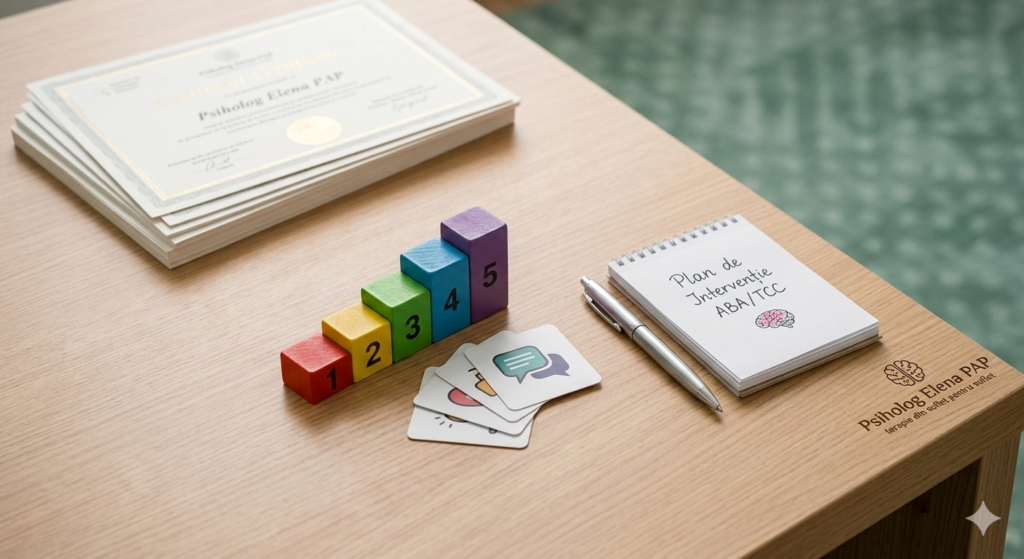
We create a personalized roadmap. Goals can range from improving communication and social skills, to managing intense emotions or increasing personal autonomy. We also determine how we will integrate behavioral techniques (elements of ABA or CBT) into daily routines.
Step 3: Therapeutic intervention and Psychoeducation
This is the longest stage, the „heart” of the therapy. We work concretely on the goals set through exercises, role-playing, and behavioral modeling. A vital part of this step is family psychoeducation, to ensure that the progress in the office is also supported at home, in an adapted environment.
Step 4: Monitoring progress and adapting strategies
Autism is a developmental process. We regularly evaluate which strategies are working and where adjustments are needed. The ultimate goal is for the person to have the tools to navigate the world with as much independence and as little anxiety as possible.
„"Self-Help" & Practical Tips – "10 Anchoring Techniques You Can Try Right Now"”
At what age can autism be diagnosed?
Response: Early signs of autism spectrum disorder (ASD) can often be seen starting at 18-24 months of age. A formal, definitive diagnosis is usually made by a child psychiatrist around age 3, but early assessment and intervention are crucial even before a final diagnosis.
Can autism be cured?
Response: No, autism is not a disease that requires a cure, but a lifelong neurodevelopmental condition. Therapy does not aim to "eliminate" autism, but to give the person the tools they need to communicate more effectively, manage sensory challenges, and integrate socially, while capitalizing on their unique strengths.
What is ABA therapy and how does it help with autism?
Response: ABA (Applied Behavior Analysis) therapy is a scientifically validated therapeutic approach that focuses on teaching specific skills (communication, self-care, social interaction) by breaking them down into small steps and using positive rewards. In my practice, I use ABA-inspired techniques in a gentle, child-centered way, adapting them to each person's unique needs.