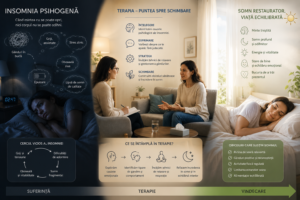
INSOMNIA – Beyond the White Nights: Regaining Sleep as a Space of Safety and Recharge
„"Do you lie down in bed exhausted, but the moment you turn off the light, your mind starts an avalanche of thoughts, worries, and scenarios? Psychogenic insomnia is not a malfunction of the body, but a signal that your nervous system feels in danger and refuses to let its guard down. Therapy gives you the tools you need to break the vicious circle of fear of not falling asleep, transforming the night into a space of peace, safety, and deep restoration again."”
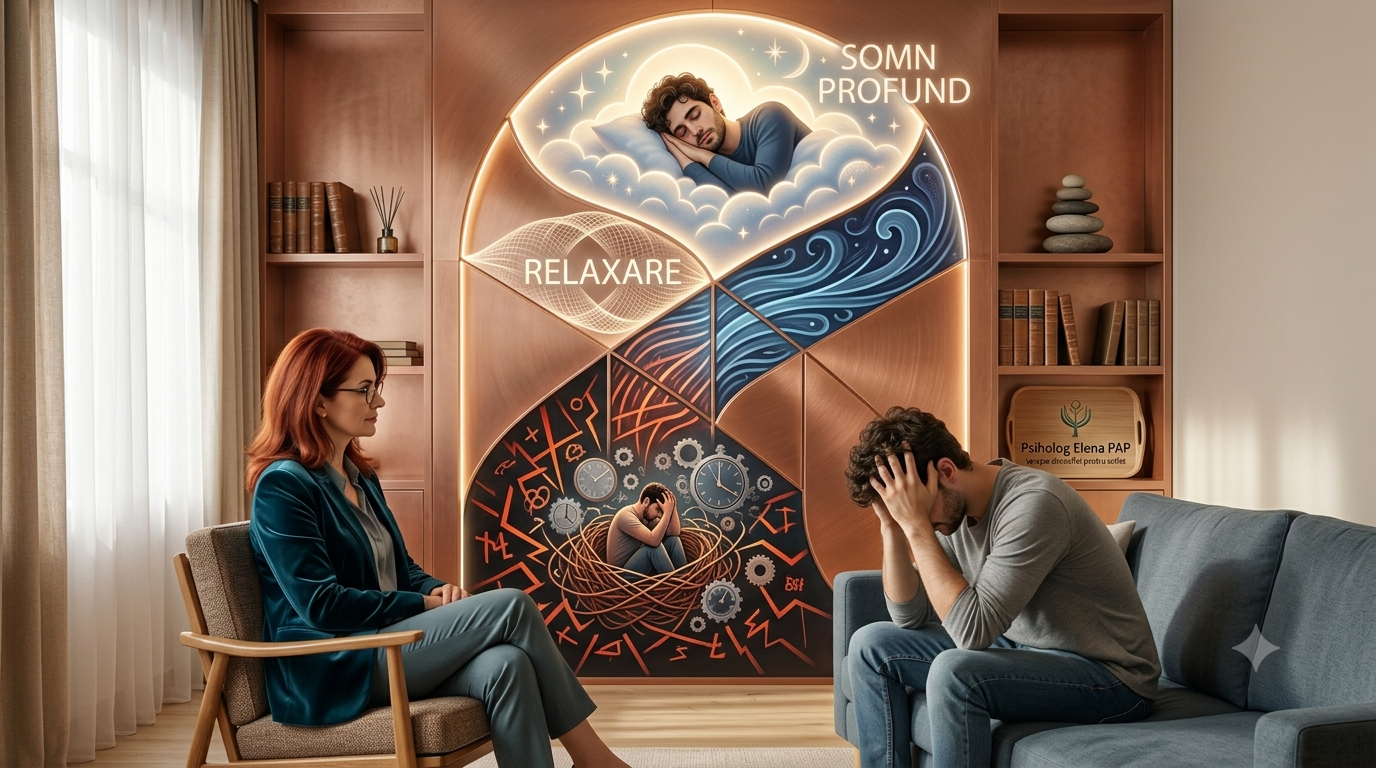
| Prevalence: | Estimated time: | Methods: |
| It is estimated that over 601% of chronic insomnia cases have a psychogenic component activated by stress, anxiety, or hypervigilance. | Improving sleep quality in 4-6 weeks through behavioral techniques; stabilizing circadian rhythm in 3-6 months. | CBT for Insomnia (CBT-I — the global gold standard), Sleep Restriction Therapy, Stimulus Control, Relaxation Techniques and Mindfulness. |
How does psychogenic insomnia manifest itself?
How does this affect daily life?
- Nocturnal mental hyperactivity: The body is physically exhausted, but the brain becomes hyper-excited the second the head hits the pillow, running through to-do lists or past regrets.
- Sleep Anxiety (Pillow Fear): You begin to fear the coming of night. The anticipation that „"and I won't be able to sleep"” triggers adrenaline, blocking the natural secretion of melatonin.
- Compulsive clock checking: You constantly calculate how many hours of sleep you have left if you fall asleep. now („"It's already 3:00, I only have 3 hours left"”), generating a huge panic in the body.
- Nocturnal awakenings with difficulty falling back asleep: You wake up in the middle of the night (often between 2:00 and 4:00) and can't fall back asleep due to subtle panic attacks or intrusive thoughts.
- Chronic fatigue and mental fog: You wake up more tired than when you went to bed. The day becomes a struggle with lack of concentration, memory loss, and low productivity.
- Emotional instability and irritability: Lack of rest lowers your stress tolerance. You become overly reactive, irritable, or vulnerable to episodes of anxiety and depression.
- Substance or sleeping pill abuse: You fall into the trap of addiction to pills, alcohol, or excessive teas to "force" your body to fall asleep, altering the natural architecture of sleep.
- Decreased immunity and physical problems: In the long term, psychogenic sleep deprivation leads to hormonal imbalances, weight gain, headaches, and vulnerability to disease.
How we work together on "affection"„
Step 1: Stimulus Control and Sleep Hygiene (20%): We break the association of the bed with the state of frustration and torment. We teach the body that the bed means exclusively sleep and intimacy, not a space for analysis.
Step 2: Implementation of the TCC-I Protocol (30%): We use structured techniques (such as cognitive sleep restriction) to strengthen rest efficiency and reduce the time spent awake in bed.
Step 3: Restructuring Catastrophic Thoughts (35%): We work directly on rigid beliefs related to sleep („"If I don't sleep 8 hours, I'll be destroyed tomorrow"”) and dissolve the anxiety behind the sleepless nights.
Step 4: Safety Anchoring and Recharging (15%): We develop personalized relaxation rituals that send the signal to the central nervous system that it is completely safe to let down your guard.
„"Self-Help" & Practical Tips – "10 Practical Tips for Regaining Sleep"”
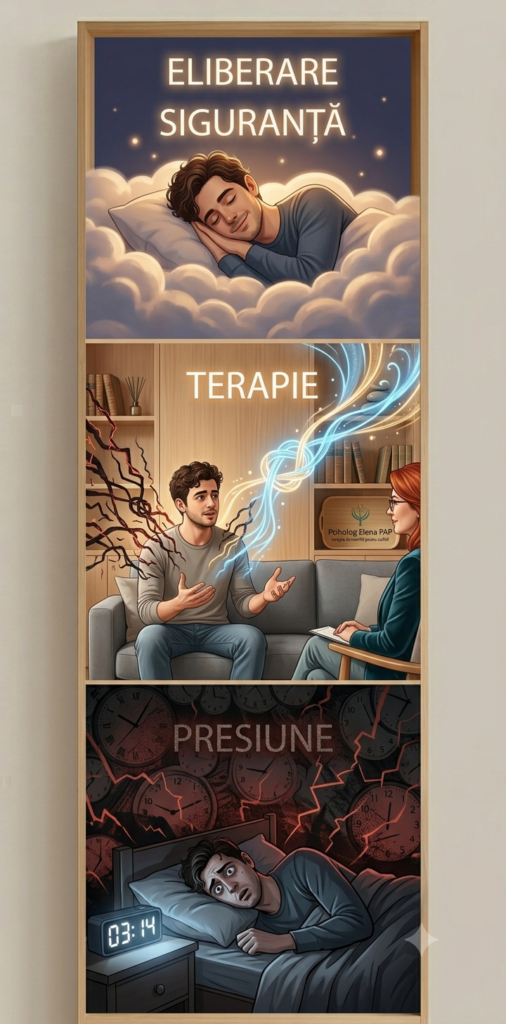
Q: Why do I fall asleep on the couch watching TV, but when I move to bed the sleep disappears instantly?
- A: This is classic evidence of psychogenic insomnia. Your brain has developed a negative conditioning: has associated the couch with relaxation (because you don't "have to" sleep there), and the bed has become a battleground, associated with stress, frustration, and the effort to fall asleep. Through therapy we erase this wrong association.
Q: I have had insomnia for several years, can it still be cured through therapy or is it too late?
- A: It's never too late. Clinical studies show that the CBT-I (Cognitive Behavioral Therapy for Insomnia) protocol has a success rate of over 70-80%, surpassing the effectiveness of long-term medications, even in long-term chronic cases.
Q: Will therapy help me quit sleeping pills?
A: Yes. Together with your doctor, we will work psychologically to reduce your anxiety about missing your pill and implement natural sleep techniques, allowing you to gradually and safely reduce your medication.