Alcohol Addiction – Causes, Symptoms and Therapy | Psychologist Constanta
Alcohol addiction is a complex disorder of the brain's reward system, characterized by the inability to control consumption, despite negative consequences on a personal, professional and physical level. It deeply affects emotional stability and family relationships, but can be managed and overcome through Cognitive-Behavioral Therapy, Motivational Interviewing and Schema Therapy. In the psychology office in Constanta or online, the intervention is personalized to understand the root causes of consumption and regain control over one's life.

| Prevalence: | Estimated time: | Methods: |
| It affects approximately 5-81% of the adult population, making it one of the most widespread forms of addiction. | 6–12 months to stabilize abstinence and prevent relapse; the process varies depending on the length of use. | Motivational Interviewing, Cognitive Behavioral Therapy (CBT), Schema Therapy, Mindfulness for Relapse Prevention (MBRP). |
How does Alcohol Addiction manifest itself?
How does it affect daily life and relationships?
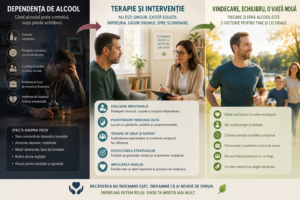
- Uncontrollable need to consume (Craving): An intense mental and physical desire to consume alcohol, especially during times of stress or anxiety.
- Loss of control and limit: The inability to stop after just one drink, with drinking continuing to the point of severe intoxication.
- Increased tolerance and psychological withdrawal: The need for increasingly larger amounts to achieve the same effect and the appearance of irritability or depressive states in the absence of alcohol.
- Consumption as an avoidance mechanism: Using alcohol as a "medication" to numb painful emotions, unresolved trauma, or insomnia.
- Deterioration of family relationships: Decreased trust in loved ones, emergence of codependency, frequent conflicts and isolation from a healthy social environment.
- Decrease in professional efficiency: Difficulty concentrating, tardiness, absenteeism or even job loss.
- Undermining self-esteem and guilt: Experiencing a vicious cycle of broken promises, deep guilt, and relapse to numb that guilt.
- Neglect of responsibilities and health: Abandonment of hobbies, deterioration of lifestyle and major risks to physical and mental health.
Intervention Structure (How we work together)
Step 1 (20%): Assessment & Motivational Interview – Assessing the consumption pattern, identifying the inner motivation for change and creating a safe environment, free from judgment or shame.
Step 2 (30%): Psychoeducation & Trigger Identification – Understanding the role that alcohol plays in managing emotions and identifying situations, thoughts, or people that trigger the desire to consume.
Step 3 (35%): Cognitive Restructuring & Developing Coping Skills – Replacing the consumption mechanism with healthy emotional regulation, problem-solving and craving management techniques.
Step 4 (15%): Consolidation & Relapse Prevention Plan – Rebuilding lifestyle, establishing clear boundaries in relationships and integrating new long-term habits.
Video Resources & Practical Tips
📌 In this video: Psychologist Elena Pap explains the psychological mechanisms behind alcohol addiction and offers practical advice for breaking the vicious cycle of consumption and managing momentary urges.
🎬 Watch on YouTube: The Wave Passes Music for Recovery from Alcohol Addiction or view it directly below:
„"Self-Help" & Practical Tips – "10 Practical Tips for Reducing Consumption and Preventing Relapses"”

Frequently Asked Questions (FAQ)
How do I know if I have an alcohol addiction or just high social consumption?
The difference lies in the loss of control and the functional role that alcohol has. If you feel the need to drink to combat stress, if you can't stop at just one drink, or if you feel guilty and hide from your loved ones, it's a psychological addiction.
How long does a therapeutic process for alcohol addiction last?
The process varies depending on the length and severity of use. Typically, a first stage of stabilization and understanding of the mechanisms lasts between 3 and 6 months, followed by a period of consolidation and relapse prevention of up to 12 months.
Is drug treatment or detoxification also necessary?
In cases of severe physical dependence (where stopping abruptly causes tremors, sweating, or physical withdrawal), a psychiatric/medical evaluation and supervised detoxification are absolutely necessary. Psychotherapy complements the medical process, addressing the underlying emotional causes.