Rebuilding After Trauma: How to Free Yourself from the Past and Reclaim Your Present
„When you go through a traumatic event, time doesn’t heal everything on its own. Trauma isn’t just a bad memory, it’s a way your body and mind have become stuck in survival mode. PTSD therapy helps you process those moments so that they become simple chapters in your past, not shadows that control your present.”

| Prevalence: | Estimated time: | Methods: |
| It is estimated that approximately 3.51% of adults experience PTSD each year. | „"Reducing states of intense alertness in 6-8 sessions; integrating trauma in 12-16 sessions."” | „"CBT (Trauma-Focused Cognitive Behavioral Therapy), Resensitization Techniques, Grounding Techniques, Mindfulness."” |
How do I know if I have PTSD?
How does this affect daily life?
- You involuntarily relive the event: You have intense flashbacks, recurring nightmares, or intrusive images that make you feel like you are in danger again.
- You are on constant alert (Hyperactivation): You get scared very easily by sudden sounds or movements, you are always irritable, you have insomnia, and you can't concentrate.
- Avoid anything that reminds you of the trauma: You refuse to go to certain places, see certain people, or even think about those moments.
- Negative changes in thoughts and mood: You are experiencing a persistent feeling of unjustified guilt, emotional numbness, or deep sadness.
- Isolation and relationship difficulties: It becomes difficult to trust others, you distance yourself from family and friends, feeling misunderstood or disconnected.
- Decline in performance and exhaustion: Your energy is consumed by your brain's "alarm system," leading to chronic fatigue and problems at work.
- Your world is getting smaller and smaller: Due to constant avoidance, you give up activities, hobbies, or daily routines, limiting your freedom.
- You live stuck in the past: You cannot enjoy the present or make plans for the future because your mind is occupied exclusively with survival.
How We Work Together (The 4 Steps to Healing PTSD)
Step 1: Safety Space (20%): We create an environment where you feel understood and protected. We teach physical stabilization techniques to manage moments when you feel overwhelmed by flashbacks.
Step 2: Establishing the Safety Distance (20%): We learn how to look at the memory without it instantly activating your nervous system in "fight or flight" mode.
Step 3: Processing and Integration (45%): We work directly on restructuring patterns of guilt or fear. We help the brain organize that "scattered" memory and store it in the past, where it belongs.
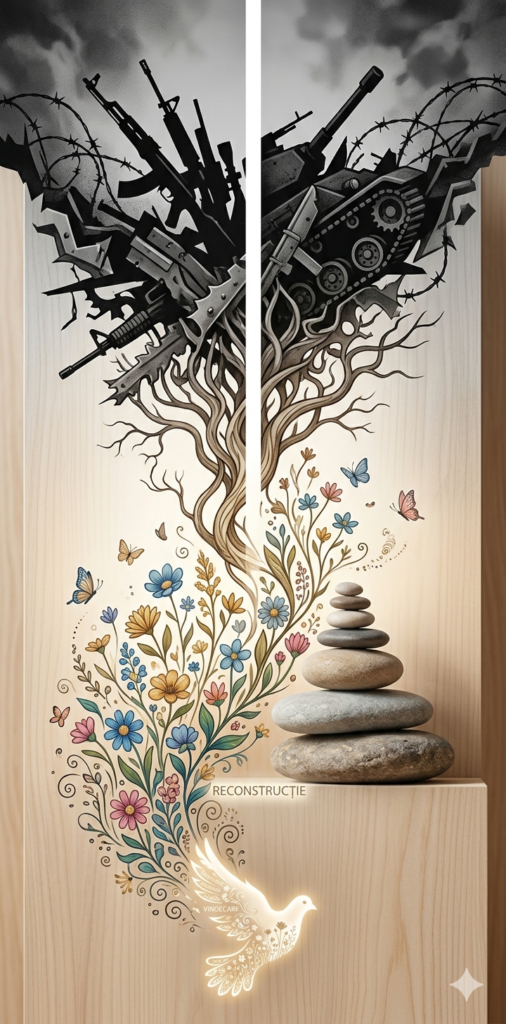
Step 4: Reconstruction of Life (15%): We redefine your current values, regain trust in relationships, and rebuild a life focused on the future, not survival.
„"Self-Help" & Practical Tips – "10 Practical Tips for Managing PTSD Symptoms"”
Q: What is the difference between Anxiety and PTSD? How do I know which one I have?
- A: Although both involve a strong state of fear and alertness, the main difference lies in source and mode of manifestation:
- Anxiety is oriented towards future. The mind creates scenarios about what could go wrong („What if…”), and the fear is often generalized or related to everyday situations.
- PTSD (Posttraumatic Stress Disorder) is anchored in a specific event from the past. It is not just a concern, but a reliving physical and emotional reliving of the trauma (through flashbacks or nightmares), as if the danger from then is happening right now, in the present.
Q: Will therapy force me to relive all the torment I went through?
A: No. Modern trauma therapy doesn't mean telling everything in detail until you're exhausted. We go at your own pace, using techniques that protect your nervous system, with the goal of reducing suffering, not increasing it.
Q: Does PTSD only occur in people who have been to war?
A: Absolutely not. PTSD can occur after any event that threatened your life or safety or that of a loved one: car accidents, physical or emotional abuse, sudden losses, serious medical diagnoses, or natural disasters.
Q: Can PTSD be completely cured?
A: Yes. With proper therapy, your brain can relearn that the danger is over. The memory will remain, but the violent emotional reaction, panic attacks, and nightmares can diminish until they disappear.