|

ANXIETY: Ten tips for controlling anxiety

Iată zece sfaturi pentru controlul anxietății:

1. Practice breathing techniques: Deep breathing exercises can help reduce anxiety. Try taking a few deep breaths through your nose and slowly exhaling through your mouth to calm your nervous system.

2. Establish a regular sleep schedule: Adequate, regular sleep can reduce anxiety. Make sure you get enough sleep and try to go to bed and wake up at the same time every day.

3. Exercise regularly: Regular exercise can reduce anxiety levels and improve mood. Try walking, running, yoga, or other physical activities that you enjoy.

4. Limit caffeine and alcohol consumption: Caffeine and alcohol can worsen anxiety in some cases. Try to limit their consumption or avoid them completely, especially before bed.

5. Practice relaxation techniques: Learn relaxation techniques such as meditation, guided visualization, or yoga. These can help reduce anxiety levels and improve your overall well-being.

6. Set priorities and divide tasks: Organize your time and tasks effectively to reduce feelings of overwhelm and anxiety related to unresolved tasks.

7. Set healthy boundaries: Learn to say "no" when necessary and set healthy boundaries in your relationships and activities.

8. Confront your irrational thoughts: Identify and confront irrational or catastrophic thoughts that fuel your anxiety. Try to replace them with realistic and constructive thoughts.

9. Keep a journal: Record your thoughts and emotions in a journal. This can help you clear your mind and gain a clearer perspective on your problems.

10. Seek professional help: If you feel that anxiety is significantly affecting your daily life, don't hesitate to seek help from a psychologist or therapist. They can help you identify the causes of your anxiety and learn effective strategies for managing it.

It's important to find what works best for you and be patient with yourself as you experiment with different techniques and approaches to managing anxiety.

Similar Posts

  • |

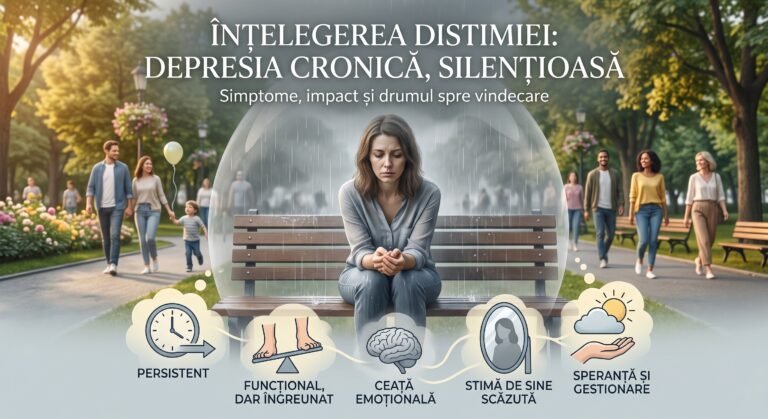
    Dysthymia

    Dysthymia — now clinically called Persistent Depressive Disorder — is one of the most underdiagnosed forms of mental suffering, precisely because it doesn't look like a crisis. It doesn't have the dramatic episodes of major depression, it doesn't suddenly stop someone's life — it sets in slowly, it becomes familiar, and over time, many people come to mistake it for their own personality. "That's just me" becomes the explanation for something that is, in fact, a treatable disorder.

  • |

    Bipolar Disorder

    Bipolar Disorder is one of the most severe and, at the same time, most commonly simplified mental disorders in popular culture — often reduced to "mood swings" or used colloquially for any emotional inconsistency. The clinical reality is much more complex: it involves distinct episodes of mania or hypomania and depression, with a profound impact on life, relationships, and functioning — but, with the right combination of treatment (medication and therapy), a stable and meaningful life is possible.

  • |

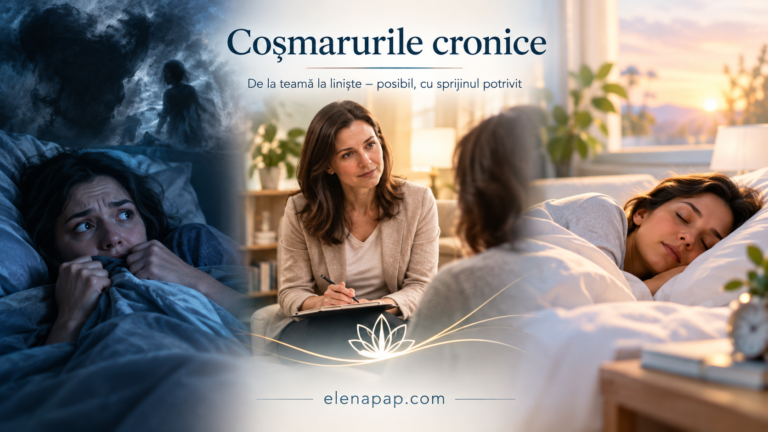
    Chronic Nightmares

    Occasional nightmares are part of the normal human experience. But when they become frequent, intense, and persistent—affecting sleep quality, daytime mood, and sometimes even the desire to go to bed—they become a real clinical problem with a specific name: Nightmare Disorder. It is one of the few sleep disorders with a specific psychological treatment, with documented results, but rarely known or recommended.

  • |

    Psychotic Episodes

    A psychotic episode is one of the most disorienting experiences a human mind can experience—and, at the same time, one of the most feared and stigmatized in public perception. The clinical reality is more nuanced than the popular image: psychotic episodes can arise from a variety of causes, many people recover fully after a first episode, and early intervention fundamentally changes the prognosis.

  • |

    tetra

    Tetraparesis — the partial reduction of muscle strength in all four limbs — radically changes a person's life, not only physically, but also psychologically, relationally, and existentially. Medical and physiotherapy recovery are essential, but equally essential, although much less frequently discussed, is the psychological process of adapting to a profoundly changed life.