Child responsibility: punishment or life lesson?
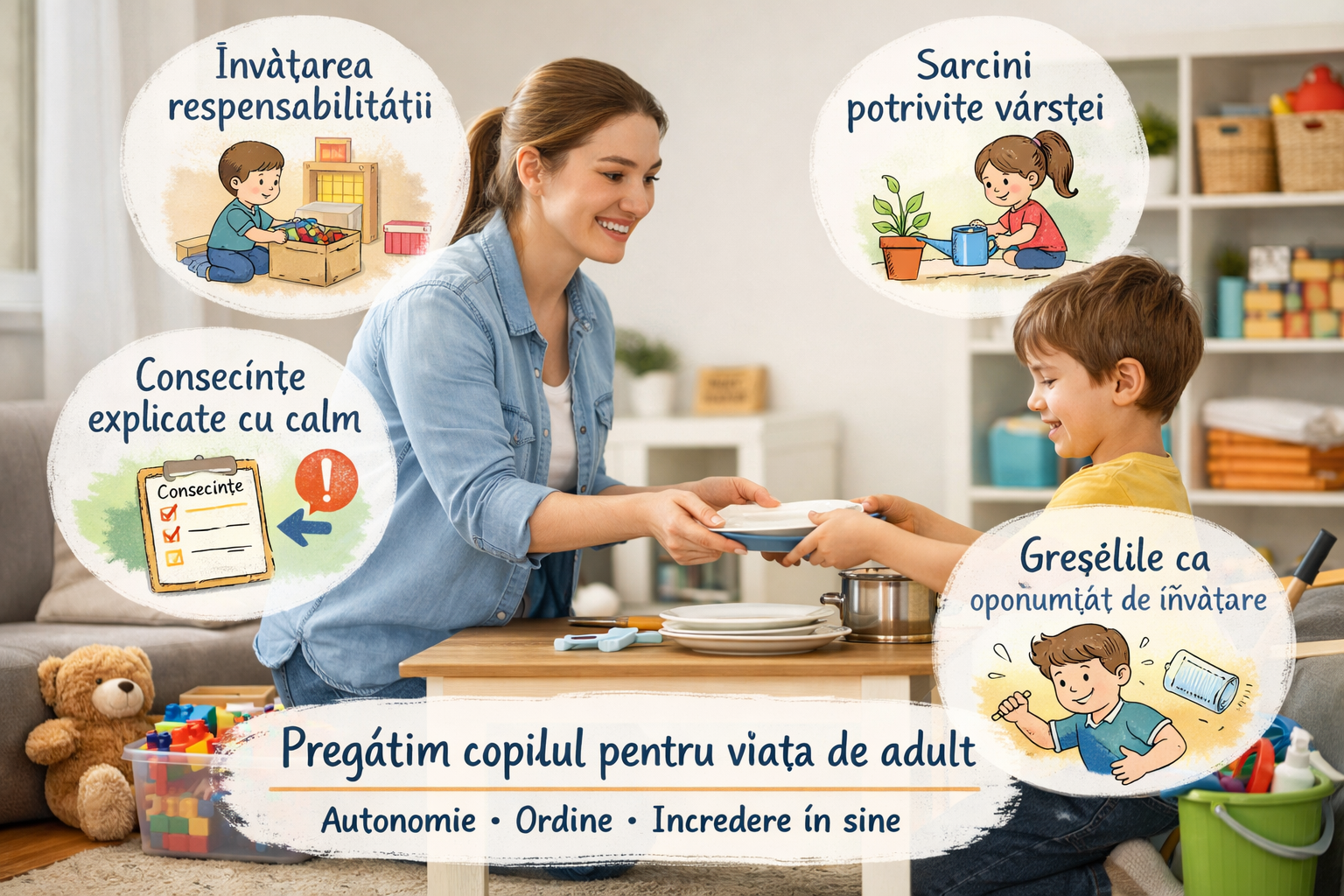
Involving a child in daily responsibilities is often mistaken for a form of punishment or an unnecessary „burden” on childhood. From a psychological perspective, the opposite is true: Responsibility is one of the most important life lessons., and this is primarily learned at home.
When adults constantly do everything for the child, with the intention of protecting them or providing comfort, they unknowingly rob them of the chance to learn. autonomy, order, perseverance and respect for others. The child has no way of becoming responsible if he is not given real contexts in which to exercise responsibility.
Why children need clear boundaries and tasks
Children need:
- clear boundaries, predictable;
- age and developmentally appropriate tasks;
- calm explanations, not harsh punishments;
- consistency, not contradictory messages.
Through simple tasks – such as picking up toys, helping at the table, or participating in light household chores – the child learns that:
- things don't happen by themselves;
- every family member counts;
- his contribution has real value.
These experiences gradually build a sense of competence („I can do it”) and self-esteem.
Consequences and mistakes – learning tools, not punishment
Responsibility is not formed through fear, but through understanding the consequences. Small, logical, and calmly explained consequences (for example: "if the toys aren't picked up, we won't have any more play space") help the child make the connection between actions and results.
Mistakes are inevitable and necessary. From a psychological point of view:
- mistakes should not be punished, but analyzed;
- they represent learning opportunities;
- The child learns more from a properly guided experience than from a moral.
Constant encouragement and consistency from adults build self-confidence and the child's ability to take responsibility without feeling ashamed or inadequate.
Responsibility is learned step by step – the Montessori perspective
In Montessori pedagogy there is an essential principle: „"Help me do it myself"”. Maria Montessori emphasized the importance of involving the child in real, concrete, age-appropriate activities that give him a sense of usefulness and belonging.
Below is a indicative list of tasks and responsibilities, inspired by Montessori principles and developmental psychology:
1–2 years
- collecting toys together with the adult;
- throwing objects in the trash;
- putting dirty clothes in a basket;
- participating in simple activities (wiping a table with a cloth).
3–4 years
- picking up toys after playing;
- placing plastic plates at the table;
- watering plants;
- choosing clothes (from limited options);
- help with cooking (washing vegetables, mixing).
5–6 years
- making the bed (simplified);
- preparing the backpack with support;
- clearing the table after eating;
- caring for a pet (under supervision);
- compliance with clear rules related to order.
7–9 years
- organizing your own space;
- responsibility for homework;
- constant help with household chores;
- managing a simple daily schedule;
- assuming the consequences for failure to fulfill tasks.
10–12 years
- regular household chores;
- free time management;
- involvement in age-appropriate family decisions;
- responsibility for personal belongings;
- developing self-control and discipline.
Involving him today means preparing him for tomorrow
A responsible child is not a "burdened" child, but a child:
- more secure on him;
- more autonomous;
- more able to relate healthily;
- more prepared for adult life.
Responsibility is learned at home, step by step, with patience, consistency and love. Involving him in everyday life today means preparing him for a tomorrow in which he will be able to function independently, respectfully and emotionally balanced.