Adolescents in adrift – an alarm signal for Romanian society
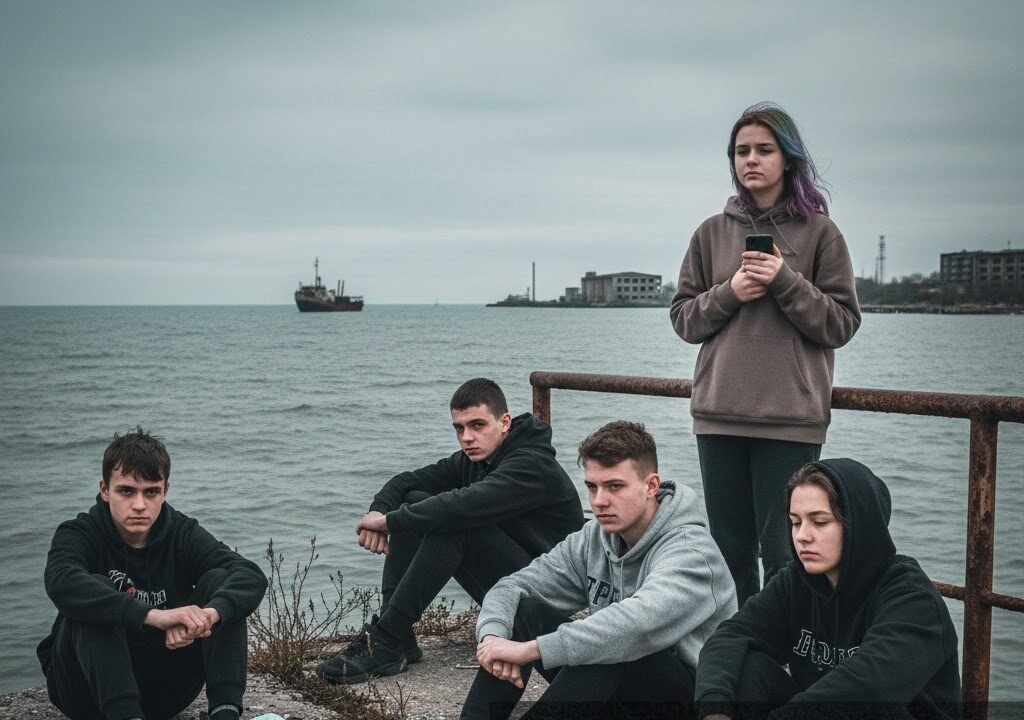
In recent years, Romania has been facing a worrying increase in cases of extreme violence and suicide among adolescents.
Young people who end up killing their friends "in cold blood" or, at the opposite end, teenagers overwhelmed by emotional fragility who choose to end their lives by throwing themselves off buildings or bridges. These tragedies are not simple isolated accidents.
They are the expression of a collective failure: familial, educational and social.
Adolescence is, by definition, a period of emotional instability, identity search, and psychological vulnerability. But what we see today goes beyond the limits of "normal age crises" and indicates the lack of real psychological protection mechanisms.
Why do some teenagers become "out of control"?
From a psychological perspective, extreme adolescent behaviors often occur at the intersection of several factors:
– Secure attachment deficit in childhood
– Lack of emotional regulation (they don't know what they are feeling and what to do with their emotions)
– Constant exposure to violence (family, online, social)
– Performance and comparison pressure (school, social media)
– Absence of emotionally available significant adults
– Stigmatization of mental health problems
An adolescent who is not seen, listened to, and emotionally contained may end up expressing their pain either through self-aggression or hetero-aggression.
What should society do?
1. Mental health must become a real priority, not just a discourse!!!
Romania has a major shortage of school psychologists, counselors, and early intervention services. It is essential to:
– there should be a psychologist in every school, with a reasonable number of students
– introduce mandatory emotional education programs
– to normalize going to a psychologist, just like going to a doctor
Prevention is always cheaper – emotionally and financially – than crisis intervention.
2. School must be more than a place of assessment
An educational system focused exclusively on grades produces:
anxious children,
fragile perfectionist teenagers,
or rebellious and aggressive young people.
The school must become:
a psychological safe space
a place where emotions are discussed, not punished
an environment that detects risk signals (isolation, aggression, withdrawal, suicidal thoughts)
3. Mass media and the online environment – responsibility, not sensationalism
The way in which cases of suicide or juvenile crime are presented can:
amplify the imitation effect
romanticize or trivialize death
It is vital that public space promotes:
correct information,
prevention messages,
healthy conflict management models.
What should families do?
1. Relationship matters more than control
Many parents confuse authority with rigidity or emotional detachment. Teenagers don't just need rules, they need:
present
genuine interest
real dialogue, not interrogation
The question "What did you do today?" should be replaced with "How did you feel today?".
2. The child's emotions should be validated, not minimized
Lines like:
„"You're exaggerating"”
„"You have no reason to be sad"”
„"Others have it worse"”
can completely block communication. For a teenager, their pain is real, even if it seems "minor" to an adult.
3. Pay attention to warning signs
Families must be educated to recognize:
sudden changes in behavior
social isolation
unusual aggression
discourse about death, futility, excessive guilt
Asking for specialized help is not a parental failure, but an act of responsibility.
Prevention starts early
An emotionally balanced teenager is, most often, the result of a child:
listened to,
protected,
learned to express their emotions,
helped to tolerate frustration.
Intervention should not begin in crisis, but in early childhood, through emotional education, healthy attachment, and coherent adult models.
Conclusion
"Out of control" teens don't just appear out of nowhere. They are the product of invisible ruptures, ignored for too long. Every tragedy tells us the same thing: someone has suffered in silence.
Society and family cannot delegate responsibility to each other. Only together can they create an environment in which adolescents no longer choose violence or death as a solution to pain.