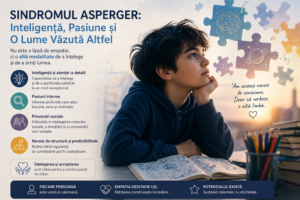
Asperger Syndrome: Intelligence, Passion, and a World Seen Differently
„"Do you often feel like an outside observer in a world with unwritten social rules? Asperger's syndrome is not a disability, but a unique cognitive architecture, where attention to detail and intense passions become the engines of success."”
| Prevalence: | Estimated time: | Methods: |
| How common is the problem: about 1 in 250 people | Improvements in social communication visible after 6-10 months of assisted therapy. | CBT (Cognitive Behavioral Therapy), Social Skills Training, Life Coaching. |
Key symptoms:
Emotional impact:
- difficulties interpreting non-verbal language (gestures, tone of voice)
- "encyclopedic" interests in specific subjects
- the need for strict routines
- direct honesty (sometimes misinterpreted)
- the feeling of being "different"„
- social fatigue caused by the effort to mimic the behaviors of others (masking)
- anxiety in new environments
How we work together
Step 1: Social decoding: We identify the social situations that create the greatest discomfort and analyze their "rules".
Step 2: Sensory and emotional management: We work on identifying signs of overwhelm (meltdown/shutdown) and creating self-regulation strategies.
Step 3: Life skills training: We practice assertiveness, small talk, and managing relationships at work or in the family.
Step 4: Integration and Authenticity: The goal is to navigate the world without losing your unique identity, turning your interests into professional advantages.
„Self-Help & Practical Advice
Q: Is Asperger's the same as Autism?
A: Clinically, it is included in Autism Spectrum Disorder (Level 1 support), but the term is retained to describe people with average or above average intelligence and no language delays.
Q: Can adults be diagnosed with Asperger's?
A: Yes, many adults only discover this in adulthood, which gives them immense liberation and explanations for their entire lives.