Technology addiction: how to recognize it and what we can do to regain control
Technology addiction
In recent years, technology has become an extension of our lives. Our mobile phones are the first thing we check in the morning and the last thing we check before going to bed. While they provide us with quick access to information, communication and entertainment, excessive use can lead to an increasingly common problem: technology addiction.
From a psychological perspective, this form of addiction is not yet officially classified as a disorder in all diagnostic manuals, but its manifestations are real, persistent, and have a significant impact on daily functioning. In the psychological office, more and more people – including children and adolescents – are presenting with symptoms associated with digital addiction.
This article aims to provide a clear understanding of the phenomenon and, above all, concrete solutions for managing it.
What is technology addiction?
Technology addiction refers to the compulsive and excessive use of digital devices (phone, laptop, tablet, consoles) to the detriment of other important activities in life: relationships, work, sleep or health.
It is important to emphasize that it is not the technology itself that is the problem, but the relationship we develop with her.
From a psychological point of view, this type of behavior is supported by reward mechanisms similar to those found in other addictions:
- dopamine release (scroll, notifications, likes)
- repetitive checking behaviors
- control difficulties
Signs of technology addiction
Early identification is essential. Some of the most common signs include:
1. Loss of control
The person sets out to spend "5 minutes" on the phone and ends up spending hours without realizing it.
2. Neglecting responsibilities
Performance at work or school decreases, delays or unfinished tasks occur.
3. Social isolation
Real interactions are being replaced by online ones.
4. Irritability or anxiety without access to technology
A strong indicator of addiction is emotional discomfort in the absence of devices.
5. Sleep disorders
Excessive use, especially in the evening, affects circadian rhythm and sleep quality.
Psychological causes of addiction
Technology addiction does not occur by chance. It is often a symptom of unmet psychological needs:
- Avoiding negative emotions (anxiety, sadness, boredom)
- The need for validation (likes, comments)
- Lack of structure and meaning
- Difficulties with emotional self-regulation
In the case of children and adolescents, risk factors include a lack of clear boundaries, parental models, and unlimited access to devices.
Impact on mental health
The effects of technology addiction are complex and often underestimated:
- increased anxiety levels
- depressive symptoms
- decreased ability to concentrate
- affecting self-esteem
- relationship difficulties
In the long term, it can contribute to the development of more severe psychological disorders, which is why early intervention is essential.
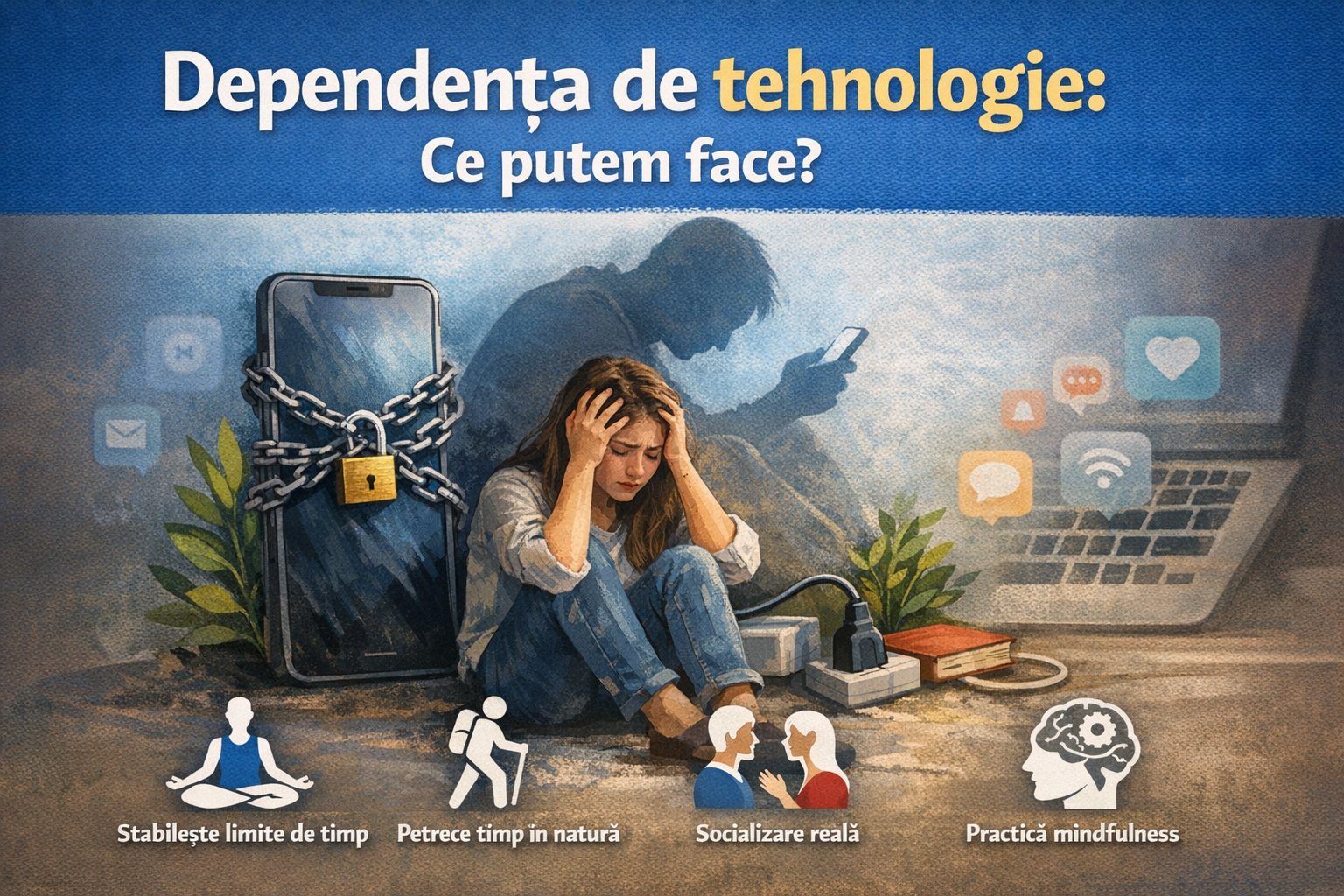
What can we do? Effective strategies
1. Awareness – the essential first step
Monitoring time spent on devices (screen time) provides a realistic picture.
2. Setting clear boundaries
- no phone at the table
- no screens 1 hour before bed
- "technology-free" intervals„
3. Digital detox
It doesn't have to be radical. It can start with:
- one day a week without social media
- hours dedicated to offline activities
4. Behavior replacement
It is essential to not just "cut off" the use, but to replace it:
- sports
- read
- outdoor activities
- creative hobbies
5. Mindfulness and self-regulation
Mindfulness techniques help to become aware of impulses and reduce automatic behavior.
6. Reconfiguring the environment
- disabling unnecessary notifications
- removing problematic applications
- using the phone intentionally, not automatically
The role of the psychological office
In moderate and severe cases, the intervention of a specialist becomes necessary.
A psychologist can:
- identify the root causes of addiction
- assess comorbidities (anxiety, depression)
- work on self-regulation mechanisms
- build a personalized intervention plan
Effective methods include:
- cognitive behavioral therapy (CBT)
- impulse management techniques
- cognitive restructuring
- family interventions (in the case of children)
In a clinical context, technology addiction is addressed not just as a problematic behavior, but as an indicator of a broader psychological imbalance.
Technology addiction in children
For parents, the issue is even more delicate.
Recommendations:
- introduce clear boundaries from the beginning
- avoid using the phone as a reward
- spend quality time offline
- be a role model (children imitate behavior)
A child does not have the self-regulation capacity of an adult, which makes them much more vulnerable.
Conclusion
Technology addiction is one of the major challenges of the modern era. We cannot eliminate technology from our lives, but we can learn to use it consciously and in a balanced way.
The difference between use and addiction is given by control.
If you feel like technology is affecting your personal, professional, or emotional life, don't ignore the signs. Early intervention, including seeking professional help, can make the difference between a manageable problem and a chronic one.